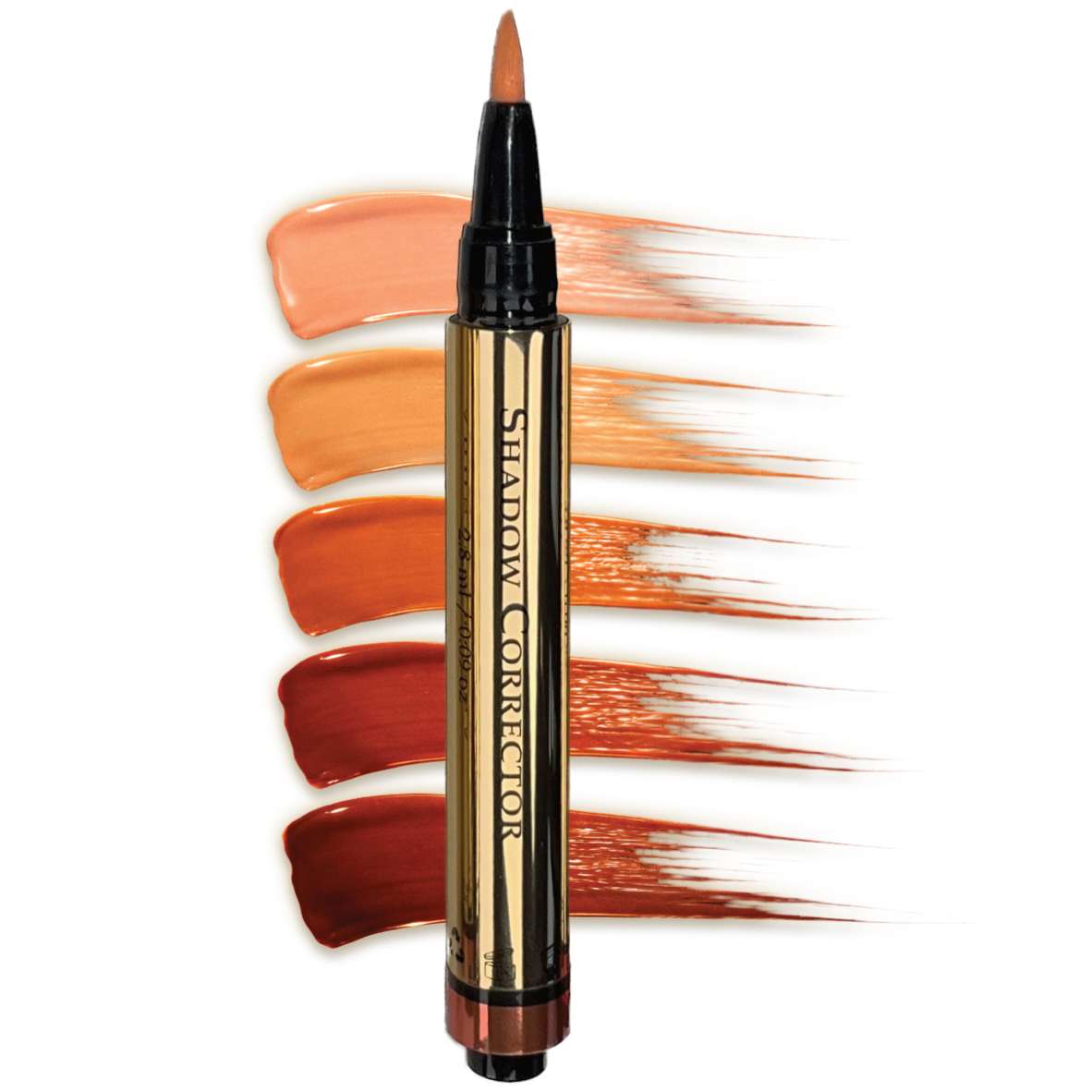
Shadow Corrector
Correct the Shadow. Keep the Skin.
A sheer, self-setting, light-correcting filter that combines corrective pigments with light diffusion to neutralize the look of unwanted brown, purple, and blue tones. Soften dark circles, camouflage 5 o’clock shadow, or sharpen beard edges while keeping your natural skin visible. The built-in brush places correction exactly where you choose. Blend, let it set, and done. No powder needed.
Three steps, thirty seconds
Brush where you need it.
One click to release a small amount, then brush precisely onto the darker area. For beard definition, apply just outside your chosen edge.
Blend with your fingertip.
Gently tap to blend. Lighter pressure keeps coverage. Firmer pressure removes excess. Use sweeping motions on the edges to fade onto your skin.
Let it set. You’re done.
Give the formula a moment to settle and blend with your natural skin tone. It sets on its own, so no powder needed.
A Deeper Dive Into the Ingredients, the Formula, and What Makes It Uniquely Adonis Arcana.
This sheer, self-setting corrector brings together iron oxides, mica, and titanium dioxide, combining color correction with light diffusion to neutralize the look of unwanted brown, purple, and blue tones. Calendula and hyaluronic acid support skin comfort and hydration, while a considered blend of clay, arrowroot, and lightweight waxes creates a smooth finish that sets after blending. No separate setting powder needed.
Each shade’s pigments harmonize with your underlying complexion, allowing your natural skin tone to become part of the finished result. The final ingredient in every shade is the skin it’s on.
Key features
- Light-Correcting Filter: Corrective pigments and light diffusion work together to neutralize the look of brown, purple, and blue tones.
- Real Skin Finish: Sheer, buildable correction lets your natural skin show through. Your underlying complexion becomes part of the finished shade, giving each shade flexibility across a range of skin tones.
- Self-Setting Simplicity: The formula sets on its own after blending. No separate setting powder needed.
- Precision Built In: The integrated brush places small amounts exactly where you choose, from under-eye darkness to stubble and beard edges.
Shade range
Five shades, each with room to work across a range of skin tones. Choose the depth and undertone closest to your complexion; the sheer formula lets your natural skin tone become part of the finished result.
- Tom
- Light skin tones with cooler undertones.
- Aiden
- Light skin tones with neutral to warm undertones.
- Orlando
- Medium skin tones with neutral undertones.
- Ray
- Deep skin tones with warmer undertones.
- Troy
- Deep skin tones with cooler undertones.
Explore the shade photos and real application results to help find your match.
Key ingredients
Iron oxides provide corrective color to help neutralize the appearance of unwanted dark tones.
Mica and titanium dioxide contribute light diffusion and optical balance, complementing the corrective pigments.
Calendula and hyaluronic acid support skin comfort and hydration.
Kaolin clay, arrowroot, and waxes help control the formula’s texture and create its self-setting finish.
FAQ
- Will it look like makeup?
- Shadow Corrector uses sheer correction and light diffusion to keep natural skin visible. Start with a small amount, blend the edges, and build only where you want more correction.
- How do I choose my shade?
- Choose the depth and undertone closest to your complexion. Each shade works across a tonal range, with your natural skin tone contributing to the finished result. Explore the shade guide and application photos above.
- Can it camouflage stubble?
- Yes. Apply a small amount to the stubble you want to camouflage and gently press to blend. You can also use it just outside your beard line to create a cleaner-looking edge.
- What exactly is Shadow Corrector?
Shadow Corrector is a sheer, self-setting light-correcting filter for dark circles, 5 o'clock shadow, and stubble camouflage. It combines corrective pigments with light diffusion to neutralize the appearance of unwanted brown, purple, and blue tones while keeping natural skin visible.
The integrated brush places correction where you choose. Blend, allow it to set, and build only if more correction is wanted. No separate setting powder is required.
- How is Shadow Corrector different from concealer?
Concealers can offer a range of coverage levels and are useful for many cosmetic goals. Shadow Corrector puts emphasis on targeted color correction and light diffusion in a sheer, self-setting formula.
Your complexion remains part of the finished shade. The pen combines corrective color, optical refinement, and precise application, so you can address darkness without assembling a separate corrector, concealer, and powder routine when that is not the result you need.
- Which concerns can Shadow Corrector address?
Dark circles and under-eye discoloration; 5 o'clock shadow; visible stubble; beard-line transitions; selected brown, purple, or blue discoloration; and scalp shadows or regrowth around fades and hair tattoos.
Its role is visual correction while worn, including when darkness is the visible distraction. It does not fill under-eye hollows or treat the cause of pigmentation. Redness and sallowness are not its primary color targets.
- Will people be able to tell I am wearing Shadow Corrector?
Its sheer, buildable finish is designed to keep skin visible and correction natural-looking. The result depends on shade, preparation, amount, blending, and lighting.
Start small, soften the edges, and check in daylight when possible. More correction is available through thin layers, but a heavy application may become noticeable.
- Can Shadow Corrector camouflage stubble?
Yes. Apply a small amount to the stubble you want to camouflage and lightly press or tap to blend through it. Build thin layers only where needed.
It reduces the visible contrast of shadow and stubble rather than removing hair. The amount it can camouflage depends on hair color, density, length, skin tone, and your desired finish. It is not a guaranteed replacement for shaving.
- Can Shadow Corrector be used for beard lineups, fades, and hair tattoos?
Yes. It can sharpen the look of a beard edge, soften regrowth around a fade, refresh the contrast of a hair tattoo, or reduce selected visible scalp shadows.
Place small amounts around the edge or transition you want to refine and blend carefully. Hair regrowth and the starting contrast affect the result; a fixed number of extra days between barber visits is not guaranteed.
- Can Shadow Corrector be used under the eyes?
Yes. Under-eye darkness was one of its original inspirations. Apply a small amount to the darker skin areas, blend gently with a fingertip, and keep the product out of the eyes and away from the lash line.
Color correction can soften visible darkness, but it does not physically fill hollows or remove puffiness. Different causes of dark circles may respond differently to cosmetic correction.
- Is Shadow Corrector makeup?
Yes. It is a cosmetic complexion product that you can use for subtle refinement or more deliberate correction. Wearing it does not require a different identity or a full makeup routine.
Your beard, your expression, and your presentation remain yours. The product gives you another way to choose how you show them.
- Why do barbers and makeup artists use Shadow Corrector?
Its built-in brush, sheer correction, and self-setting finish make it useful for targeted finishing work. Barbers can refine the appearance of lineups, fades, and hair tattoos; makeup artists can correct under-eye darkness and other selected dark tones.
Professionals can incorporate it alongside other cosmetics and tools. The hygiene method matters when serving multiple clients; use a palette and a clean separate brush rather than sharing the pen's applicator directly.
- How do I choose my Shadow Corrector shade?
Choose the depth and undertone closest to your complexion, then assess a small blended application on the area you want to correct. Tom suits lighter, cooler complexions; Aiden lighter neutral-to-warm complexions; Orlando medium neutral complexions; Ray deeper warm complexions; and Troy deeper cool complexions.
Each shade works across a tonal range because the formula is sheer. That flexibility does not guarantee one shade will match everyone within a broad skin-tone category. Use the shade guide, application photos, and personal help where available.
- Why are there only five shades?
The shades were developed to work with the underlying complexion rather than cover it entirely. Sheer corrective pigments and light diffusion allow your natural skin tone to become part of the finished result.
That makes a range of five shades useful across multiple complexions. Depth, undertone, and the discoloration being corrected still matter, so test a small application and use the shade guide to help choose.
- Does Shadow Corrector change color on my skin?
Its shade flexibility comes from the sheer formula blending visually with your underlying complexion. It is not a claim that the pigments sense your skin or automatically change into an exact match.
Give the blended application a moment to settle before assessing it. Each shade's pigments harmonize with your underlying complexion: the final ingredient in every shade is the skin it is on.
- What if my shade looks too orange or too pale?
First check the amount, preparation, and blending in daylight. Excess product can make corrective color more apparent. If the undertone still looks wrong, another shade may work better.
For example, someone finding Aiden too warm may prefer Tom; someone finding Ray too warm may prefer Troy. If depth looks too light or too dark, an adjacent depth may be more appropriate. Tell us what you see so we can help choose the direction rather than asking you to guess again.
- What if Shadow Corrector looks dry or catches on texture?
Prepare skin with appropriate hydration and let skincare settle. Begin with a small amount; a self-setting formula can look drier on poorly prepared skin or when too much is applied.
Gently press or lightly buff the edges with a clean fingertip. A barely damp fingertip or well-squeezed sponge can help reblend an edge. Avoid rubbing heavily around the eyes, and build only where you want additional correction.
- How do I apply Shadow Corrector?
Twist to dispense a small amount, brush onto the darkness or stubble you choose, then tap or press with a fingertip to blend. For beard definition, apply just outside your selected edge.
Allow the formula to settle into its self-setting finish. Check the result before dispensing more. Brush. Blend. Done.
- How do I prime a new Shadow Corrector pen?
A new pen commonly needs about 7–12 clicks before product first reaches the brush. Twist slowly and pause to check the tip so you do not dispense more than you need.
Once primed, fewer clicks may be needed. If the pen still does not dispense, contact us rather than forcing or dismantling the mechanism.
- Do I need powder, extra brushes, or other makeup?
No separate setting powder or specialist tool is required for basic use. The formula combines correction, light diffusion, and self-setting application in one pen, and can be blended with a clean fingertip.
You can still use your preferred brushes or other cosmetics if you enjoy them. Skin preparation and an appropriate shade remain useful even in a simple application.
- Can Shadow Corrector be layered?
Yes. Apply several thin layers rather than one heavy layer, allowing each to settle briefly before adding more.
Build only in the areas that need it. Too much at once can change the finish and increase transfer before the formula has set.
- Does Shadow Corrector transfer?
Transfer is generally minimal in our normal-use experience when a small amount is blended and allowed to set. It is not transfer-proof. Excess product, insufficient setting time, sweat, and rubbing can increase transfer.
Check the application before contact with clothing and use thin layers. The self-setting finish reduces the need for powder; it does not guarantee resistance to every form of friction or moisture.
- Is Shadow Corrector waterproof or sweat-proof?
No. Water can reactivate the formula, and rubbing while wet can remove it. Some transfer may occur with sweating.
If it becomes damp and is left undisturbed, it can settle again as it dries. Pat carefully rather than rub, then check whether a small touch-up is needed. There is no fixed wear-hour promise for every activity or climate.
- Can I reblend an edge after Shadow Corrector sets?
Yes. Use a barely damp clean fingertip or a well-squeezed sponge on the edge you want to soften. Minimal moisture can reactivate the product for blending.
Avoid soaking the application. Let it dry and settle again afterward. Rubbing wet product can remove it, which is also useful when taking it off.
- How do I remove Shadow Corrector?
The formula is designed to reactivate with water and come away with gentle wiping, without requiring a separate face wash solely for the corrector. Moisten the area and remove gently with a clean soft cloth, avoiding direct eye contact.
If your application also includes sunscreen or other cosmetics, follow a cleansing method that removes those products too. Do not scrub skin to remove correction.
- Where does Shadow Corrector fit with moisturizer and sunscreen?
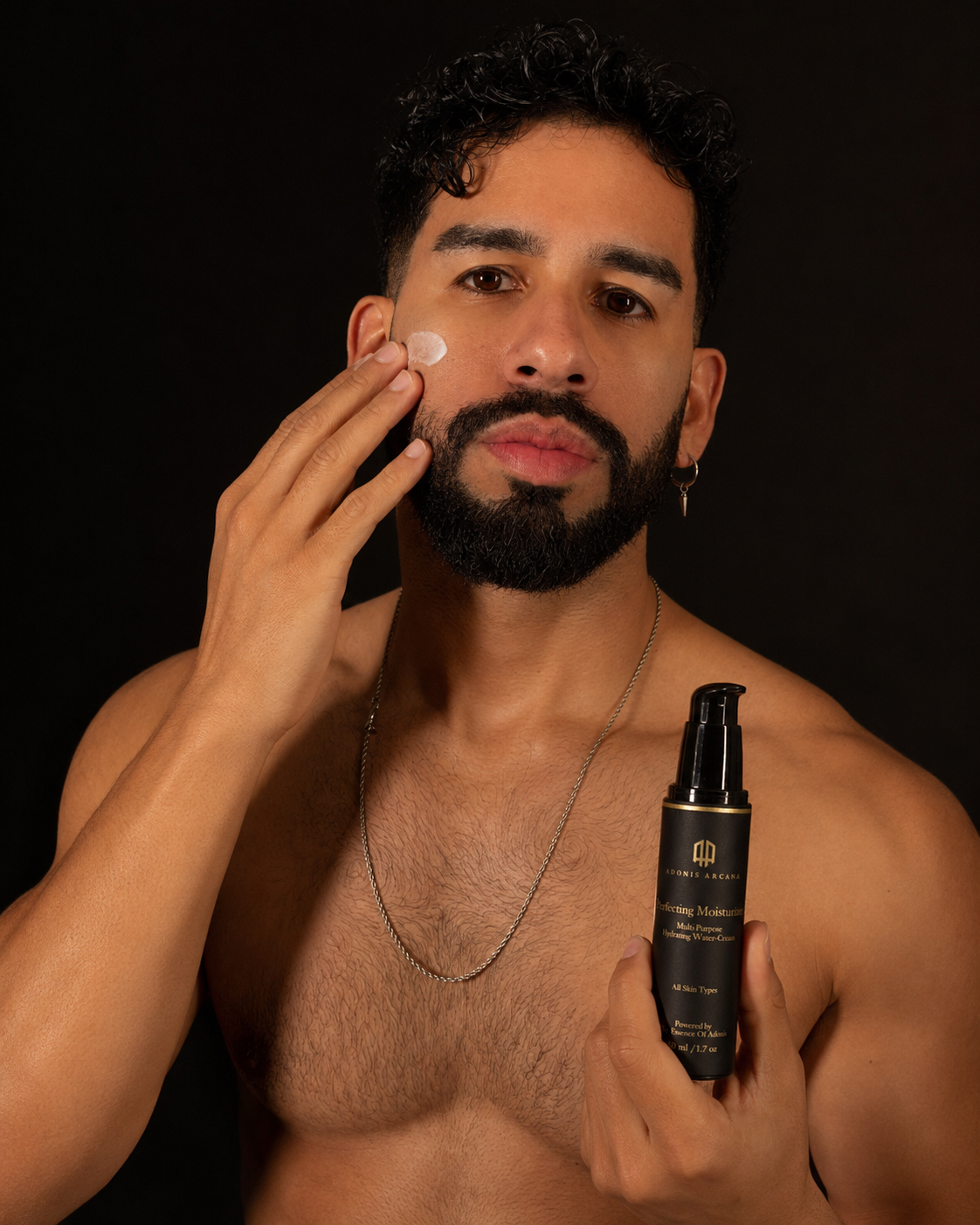
Apply skincare first. Perfecting Moisturizer provides lightweight preparation; for daytime use, apply sunscreen next using its directions. Allow those layers to settle, then apply Shadow Corrector.
Do not mix the corrector into sunscreen or reduce sunscreen quantity for a cosmetic finish. Shadow Corrector itself is not sun protection, even though its formula contains titanium dioxide.
- How do I care for the brush and use it hygienically?
For personal use, keep the brush free of accumulated residue, avoid touching it to dirty or broken skin, and replace the cap. Gently wipe surface residue with a clean tissue or cloth when needed. Do not add cleaning liquid to the pen.
For professional use, dispense onto a clean palette without touching a client's skin, then apply with a separate brush that is appropriately cleaned between clients. The formula's preservative system does not make sharing the built-in brush sanitary.
- What if my Shadow Corrector shade does not work?
Contact us with your order number and describe whether it looks too warm, cool, light, or dark. We offer one complimentary shade replacement per customer within a 12-month period, requested within 30 days of shipment and subject to the return and exchange policy.
The product should have been lightly tested for shade matching. For an approved replacement, we can help you choose another shade; you do not need to send the original pen back under our shade-replacement arrangement. Keep it for a possible seasonal shade or highlight use if it suits you. Contact us before arranging any return.
- Who can use Shadow Corrector?
Anyone seeking targeted visual correction of under-eye darkness, 5 o'clock shadow, stubble, or selected brown, purple, and blue tones. It was developed with men's cosmetics needs in mind and can be used regardless of gender.
Consider the shade, skin preparation, and intended result. It is not a treatment for every cause of discoloration or a replacement for a foundation when full-face opaque coverage is your goal.
Moisturizer first, corrector second
Perfecting Moisturizer blurs texture and gives the corrector an even surface to sit on. One pass covers more, and the finish stays put through the day.